
amccomb

Image
amccomb@arizona.edu
Phone
520-621-6296
Office
Learning Services Building
Office Hours
Please email professor to schedule a meeting or refer to class syllabus.
McComb Sanchez, Andrea
Associate Professor

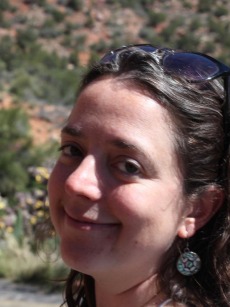
Dr. Andrea McComb Sanchez (Ph.D. in Religious Studies, University of California, Santa Barbara) specializes in Native American religious traditions, religion in the Southwest, religion and colonialism in the U.S., and religion and the environment. She is a member of the American Indian Studies Graduate Interdisciplinary Program and an affiliate of the Institute of the Environment. Dr. McComb Sanchez’s book, published in 2025, Of Corn and Catholicism: A History of Religion and Power in Pueblo Indian Patron Saint Feast Days, focuses on the imposition, adaptation, and eventual appropriation of Catholicism by Pueblo Indians through their development of the Patron Saint Feast Days, and analyzes how these Feast Days are both a relaxation and a maintenance of boundaries between Catholicism and older Pueblo traditions and ceremonies (https://www.nebraskapress.unl.edu/nebraska/9781496200556/of-corn-and-ca…). Dr. McComb Sanchez teaches courses on Native American religious traditions, religion and culture in the Southwest, religion and ecology, and theory and method in religious studies.  

Currently Teaching

RELI 160D5 – Spirituality, Ceremony, and Saints of the Southwest

An introduction to the religious history and contemporary religious diversity of the region currently known as the American Southwest. The religious landscape of this area includes the traditions of indigenous communities, Spanish colonial descendants, Mexican Americans, Anglos, and immigrants from around the globe. This class will take both an historical and thematic approach to religion in the Southwest exploring the role of religion in colonial expansion (Spain, Mexico, and the United States) and focusing on a variety of topics such as land-based spirituality, shrines, pilgrimage, folk saints, religious syncretism, and new religious movements.

An introduction to the religious history and contemporary religious diversity of the region currently known as the American Southwest. The religious landscape of this area includes the traditions of indigenous communities, Spanish colonial descendants, Mexican Americans, Anglos, and immigrants from around the globe. This class will take both an historical and thematic approach to religion in the Southwest exploring the role of religion in colonial expansion (Spain, Mexico, and the United States) and focusing on a variety of topics such as land-based spirituality, shrines, pilgrimage, folk saints, religious syncretism, and new religious movements.

RELI 212 – American Indian Religious Traditions

This course offers a broad introduction to the diversity and complexity of American Indian religious traditions historically and in the contemporary. Students will explore general themes in the study of American Indian religions and spirituality along with analyzing specific examples. Of particular importance are the history and effects of colonialism and missionization on Native people, continuing struggles for religious freedom and cultural survival, and historical and contemporary religious responses to social, cultural, political, and geographical changes.

This course offers a broad introduction to the diversity and complexity of American Indian religious traditions historically and in the contemporary. Students will explore general themes in the study of American Indian religions and spirituality along with analyzing specific examples. Of particular importance are the history and effects of colonialism and missionization on Native people, continuing struggles for religious freedom and cultural survival, and historical and contemporary religious responses to social, cultural, political, and geographical changes.

RELI 380 – Encountering Religion

What is religion? How has religion been understood and explored, past and present? What are the different scholarly approaches to understanding and explaining religion in all its diversity? How has the academic conversation about religion, what it is and how to study it, changed over the years? In tackling these questions, we will read and discuss texts from a variety of religious studies approaches to help illuminate the complexity of studying the phenomenon we call religion.